
Introduction
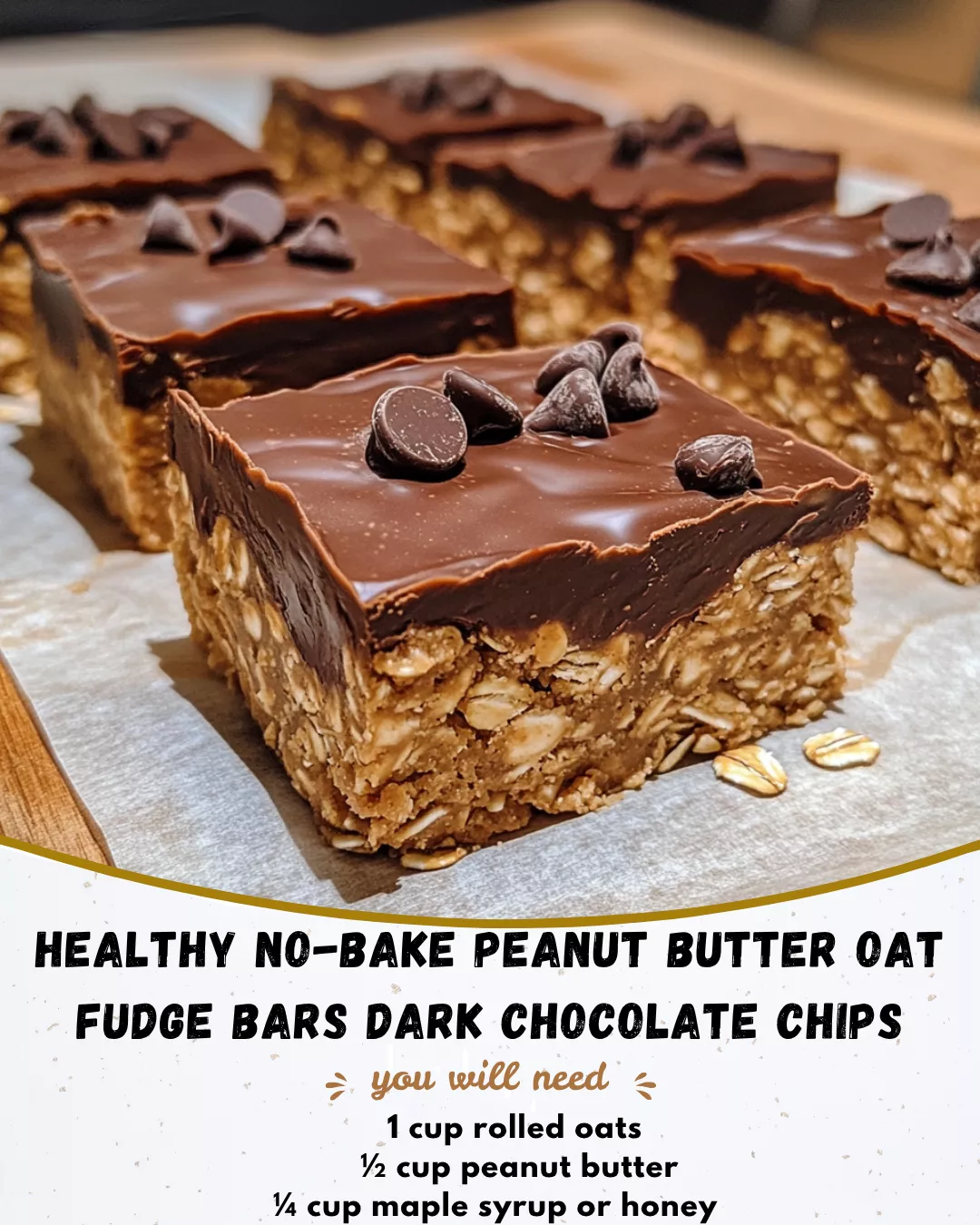
My brother grabbed one of these off the counter thinking it was a candy bar. He ate three before I told him they were made with oats and peanut butter. The dual-layer design — that thick, chewy peanut butter oat base beneath a glossy, snappable dark chocolate fudge top — is the trick that makes these bars genuinely unforgettable. Scroll down and let me show you exactly how it works.
Why You’ll Love This Recipe
These healthy no-bake peanut butter oat fudge bars with dark chocolate chips deliver a snack experience that feels completely indulgent while using nothing but whole, recognizable ingredients.
- That thick, glossy dark chocolate fudge layer — smooth, rich, and set firm with chocolate chips pressed right into the surface, it looks like something from a chocolate shop and tastes even better.
- Hearty, chewy peanut butter oat base — dense, satisfying, and packed with visible rolled oats that give every bite genuine substance and a comforting, nutty sweetness.
- Zero oven time, zero stress — the freezer sets both layers perfectly and you never heat up the kitchen or stand over a stove for more than five minutes.
- Only five core ingredients — you almost certainly have everything already, which means these can happen on any afternoon with zero planning required.
- Stays perfectly set in the fridge all week — slice them clean, stack them in a container, and you have the best grab-and-go snack of the week waiting for you every single morning.
Ingredients Needed
- 1 cup rolled oats
- ½ cup natural peanut butter
- ¼ cup maple syrup or honey
- 1 teaspoon vanilla extract
- Pinch of salt
- 1 cup dark chocolate chips
- 1 tablespoon coconut oil
- Extra chocolate chips for topping
Ingredient Notes
The chocolate layer is where quality matters most — use dark chocolate chips at 70% cacao or higher for that genuinely thick, rich, snappable fudge top that firms up beautifully and slices cleanly. Ghirardelli 72% or Enjoy Life dark chips are my consistent go-to picks. For the peanut butter, a natural drippy variety like Adams or Smucker’s Natural coats the oats most evenly. Maple syrup gives a slightly more complex, caramel-like depth than honey and is my personal preference for this specific recipe.
How to Make It
Step 1: Line the Pan and Warm the Peanut Butter Mixture
Line an 8×8 inch pan with parchment paper leaving a generous overhang on two sides. In a small saucepan over low heat — or in a microwave-safe bowl in 20-second bursts — gently warm the peanut butter and maple syrup together until they melt into one smooth, pourable, fragrant mixture. Stir in the vanilla extract and salt.
Pro tip: Don’t let this mixture boil or even simmer. You just want it fluid enough to coat every oat evenly — overheating the peanut butter changes its texture and makes the base grainy and crumbly rather than cohesive and chewy.
Step 2: Combine the Warm Mixture with the Rolled Oats
Pour the warm peanut butter mixture directly over the rolled oats in a large bowl. Stir thoroughly until every single oat is completely coated and glistening with that rich, golden, fragrant mixture. The result should look sticky and clumped together — thick, textured, and already incredibly inviting. That clumping is exactly what creates the chewy, cohesive base layer.
Common mistake: Using cold peanut butter straight from the jar. Cold peanut butter doesn’t flow into the oats — it sits on top in patches and leaves dry, uncoated oats throughout the base that crumble when you try to slice the finished bars. Always warm it first.
Step 3: Press the Oat Base Firmly Into the Pan
Transfer the coated oat mixture into the lined pan. Press it down firmly and evenly using the flat bottom of a measuring cup or glass — apply real, consistent pressure across the entire surface including every corner. The more firmly you pack this base, the more cleanly and cohesively it will slice after the chocolate layer sets on top. Freeze for exactly 20 minutes.
Pro tip: The 20-minute freeze on the base is non-negotiable. Pouring warm chocolate directly onto an unchilled base causes the two layers to merge at the interface rather than sitting as distinct, beautiful separate layers. Twenty minutes of patience creates that clean, dramatic two-layer cross-section.
Step 4: Make the Dark Chocolate Fudge Topping
While the base chills, combine the dark chocolate chips and coconut oil in a microwave-safe bowl. Microwave in 30-second bursts, stirring between each, until the mixture is completely smooth, glossy, and pourable. Let it cool for two to three minutes — you want it fluid but not steaming when it hits the cold oat base below.
Step 5: Pour, Top with Chips, and Freeze Until Set
Pour the warm chocolate mixture evenly over the chilled oat base and spread it into a smooth, level, gloriously glossy layer using a spatula. Immediately press extra chocolate chips across the entire surface so they sit embedded in the chocolate and stay put through the full freeze. Return the pan to the freezer for a minimum of 30 to 40 minutes until the chocolate layer is completely firm. Lift out, slice into bars, and try to share them. Good luck with that.
Key Ingredients & Health Benefits
Rolled oats build the substantial, chewy base that makes every bar feel genuinely filling rather than just sweet. Beyond texture, they deliver soluble beta-glucan fiber that manages cholesterol levels, supports heart health, and provides the kind of slow-burning carbohydrate energy that keeps you fueled and focused for hours — making these bars a legitimately functional snack rather than just a satisfying one.
Natural peanut butter binds the oat base together while delivering plant-based protein, heart-healthy monounsaturated fats, and a deeply rich, nutty flavor that makes the base layer taste like something worth eating entirely on its own — before the chocolate even enters the picture. It also keeps blood sugar steady, which is the difference between an energizing snack and a crash in disguise.
Maple syrup sweeps in as the natural sweetener that activates the peanut butter and gives the base its slightly caramelized, warm depth of flavor. Unlike refined sugar, it adds trace minerals and antioxidants while providing a complex, rounded sweetness that complements both the oats and the dark chocolate in a way a simpler sweetener simply couldn’t.
Dark chocolate at 70% cacao is the ingredient that transforms a solid snack bar into something genuinely crave-worthy and visually stunning. At this cacao level, it delivers flavonoid antioxidants, magnesium, and a deeply bittersweet, rich flavor that sets firm and snaps cleanly — exactly the qualities that make this fudge topping so satisfying to eat and so impressive to look at.
Customization Ideas
These healthy no-bake peanut butter oat fudge bars with dark chocolate are wonderfully flexible — here are five variations that work beautifully:
- Add a sea salt crown — scatter flaky Maldon salt over the chocolate chips immediately after pouring the fudge layer. It intensifies every flavor in the bar and creates a sophisticated, irresistible sweet-salt finish.
- Swap to almond butter — it creates a lighter, slightly more delicate base flavor that lets the dark chocolate layer take the spotlight more dramatically without the assertive peanut presence.
- Press in toasted coconut flakes — scatter them over the chocolate layer with the chips before freezing for a cozy, tropical twist that adds texture and an unexpected warmth to every bite.
- Add a cinnamon layer — stir ½ teaspoon of cinnamon into the oat base mixture for a warmly spiced, nostalgic depth that pairs beautifully with the dark, bittersweet chocolate topping.
- Use white chocolate for the top layer — melt white chocolate chips with coconut oil for a sweeter, creamier, more refreshing variation that creates a completely different but equally stunning visual contrast against the golden oat base.
Pro Tips & Common Mistakes
Press the oat base with genuine commitment. A loosely packed base crumbles the moment the knife goes through it. Use the flat bottom of a measuring cup and press firmly from the center outward to every corner — the structural integrity of the finished bar depends entirely on this single step being done properly.
Score the chocolate layer at 20 minutes. After the first 20 minutes of the final freeze, the chocolate is firm but still slightly pliable. Run a sharp knife along your planned cut lines at this stage — it prevents the top layer from shattering into jagged cracks when you slice through it fully after complete setting.
Let’s be real — 30 minutes minimum freeze time for the chocolate layer is the floor, not the ceiling. Cutting the chocolate layer short even by 10 minutes produces a soft, sticky top that drags under the knife and smears across the oat base. A properly frozen chocolate layer snaps cleanly under the knife and produces those clean, glossy cross-sections worth photographing.
Storing & Freezing Guide
Store bars in an airtight container in the refrigerator for up to 7 days — the oat base stays chewy and firm, and the chocolate layer maintains its glossy, snappable quality the entire time. For longer storage, wrap individual bars in parchment paper and freeze in a zip-lock bag for up to 3 months. To enjoy from frozen, let a bar sit at room temperature for 8 to 10 minutes — the chocolate softens to that perfect, rich, just-right consistency without getting sticky or losing its structural integrity.
FAQs
Can I use quick oats instead of rolled oats? You can, but the texture difference is genuinely significant. Quick oats absorb the warm peanut butter mixture much faster and produce a softer, denser, more paste-like base rather than the hearty, chunky, visible-oat texture you can see in the photo. For that satisfying chew and structural firmness that holds up under the chocolate layer, rolled oats are the only right choice for this recipe.
Why is my chocolate layer cracking when I slice? The chocolate was fully frozen rather than scored first at the 20-minute mark. Next time, score your cut lines when the chocolate is firm but still slightly pliable — usually 15 to 20 minutes into the final freeze. Also run your knife under hot water and dry it between every cut. Both steps together eliminate cracking and give you those clean, defined edges every time.
Can I make these without coconut oil in the chocolate layer? Yes — substitute a teaspoon of neutral oil like avocado or light olive oil. Coconut oil is preferred because it sets the chocolate layer firmer and gives it a slight sheen, but any neutral fat performs the same fluid-when-warm, firm-when-cold function. Avoid butter, which can make the chocolate layer slightly grainy rather than smooth and glossy.
How thick should each layer be? The oat base should press to about ¾ inch thick — substantial enough to provide real chewy resistance under the chocolate. The chocolate layer should be about ¼ inch thick — thick enough to be genuinely rich and satisfying but thin enough to snap cleanly rather than shatter. That ratio creates the visual and textural balance you see in the photo.
Final Thoughts
These healthy no-bake peanut butter oat fudge bars with dark chocolate chips have become the snack I make when I want to impress people with minimal effort and maximum visual impact. That two-layer cross-section never fails to stop conversation — and knowing it came from five simple ingredients is the kind of private satisfaction that never gets old. If you make them, tag me or leave a comment. I want to see that glossy dark chocolate layer in full, snappable, gorgeous close-up.